Inout Loading
Explore Features
Stay Updated
Get the latest updates and insights into resident management solutions delivered straight to your inbox.
Download Our App
Get the latest updates and insights into resident management solutions delivered straight to your inbox.
Download Our App
A residency with a few hundred flats can easily have a thousand vehicle movements a day once you count residents, staff, deliveries, and guests. Manually verifying and logging every one of them at a single gate creates exactly the kind of bottleneck that frustrates residents during peak hours.
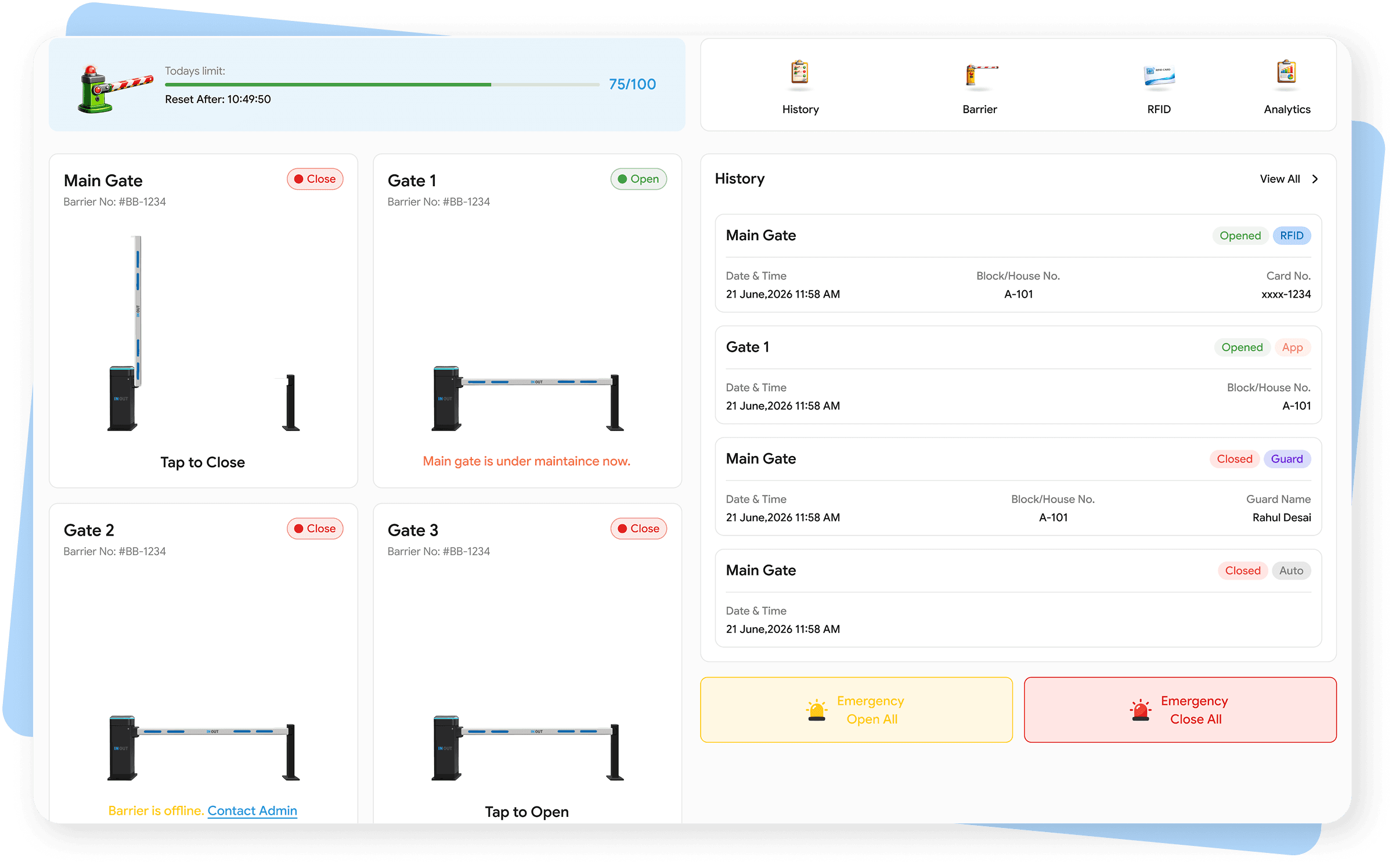
Registered vehicle access — through RFID tags or app-based approval — lets known vehicles move through without a manual stop-and-check every time, while still keeping a complete log of every entry and exit.
Automating known, recurring traffic doesn't mean loosening security for everyone else. Pre-approved guests and deliveries still go through a visitor check-in flow — the difference is that residents' own vehicles no longer create the same friction that unregistered traffic reasonably should.
In a residency with three towers and shared underground parking, evening rush hour can mean forty or fifty vehicles arriving within a thirty-minute window as residents return from work. If every one of them has to slow down for a manual check, the queue backs up onto the main road outside — which isn't just an inconvenience, it's the kind of visible bottleneck that generates more complaints to the managing committee than almost anything else in a large residency. Automating entry for registered vehicles is often the single change that resolves the most resident complaints per unit of effort spent.
Visitor vehicles don't have the same standing as a resident's registered car, and most systems handle this by issuing a time-bound digital pass tied to a specific pre-approved visit — the barrier still opens smoothly, but the vehicle is logged as a guest rather than treated identically to a resident. This keeps the speed benefit for expected traffic while still maintaining a distinct, reviewable record for anyone who isn't a permanent resident.
This comes up with residents who drive a company car, a rental, or borrow a family member's vehicle occasionally. Most platforms let a resident register more than one vehicle against their unit, or issue a short-term pass for an unregistered one without needing a full re-registration each time — the goal is that an occasional exception doesn't mean falling back to a fully manual process for that resident every time.
Traffic management at the gate is really a security question wearing a convenience disguise: the faster known vehicles move through, the more attention security staff can give to the traffic that actually needs a closer look.