Inout Loading
Explore Features
Stay Updated
Get the latest updates and insights into resident management solutions delivered straight to your inbox.
Download Our App
Get the latest updates and insights into resident management solutions delivered straight to your inbox.
Download Our App
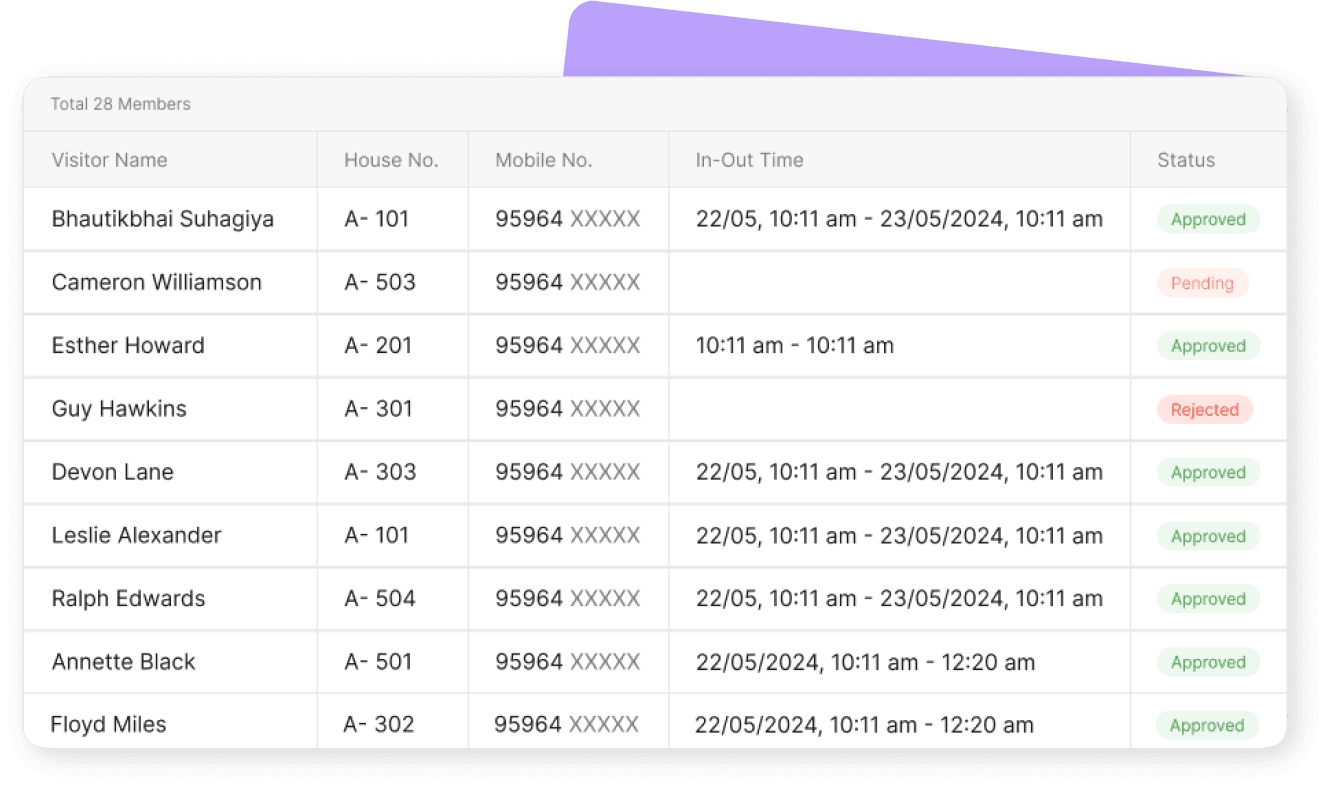
Every residency has a gate, and every gate has a story of a visitor register that went missing, an illegible handwriting entry, or a delivery agent who walked in without anyone actually verifying who they were. Manual visitor logs were never built for the scale or speed that modern gated communities need.
Digital visitor management replaces that register with a system residents and security staff can both trust. Here are five concrete ways it strengthens security at the gate.
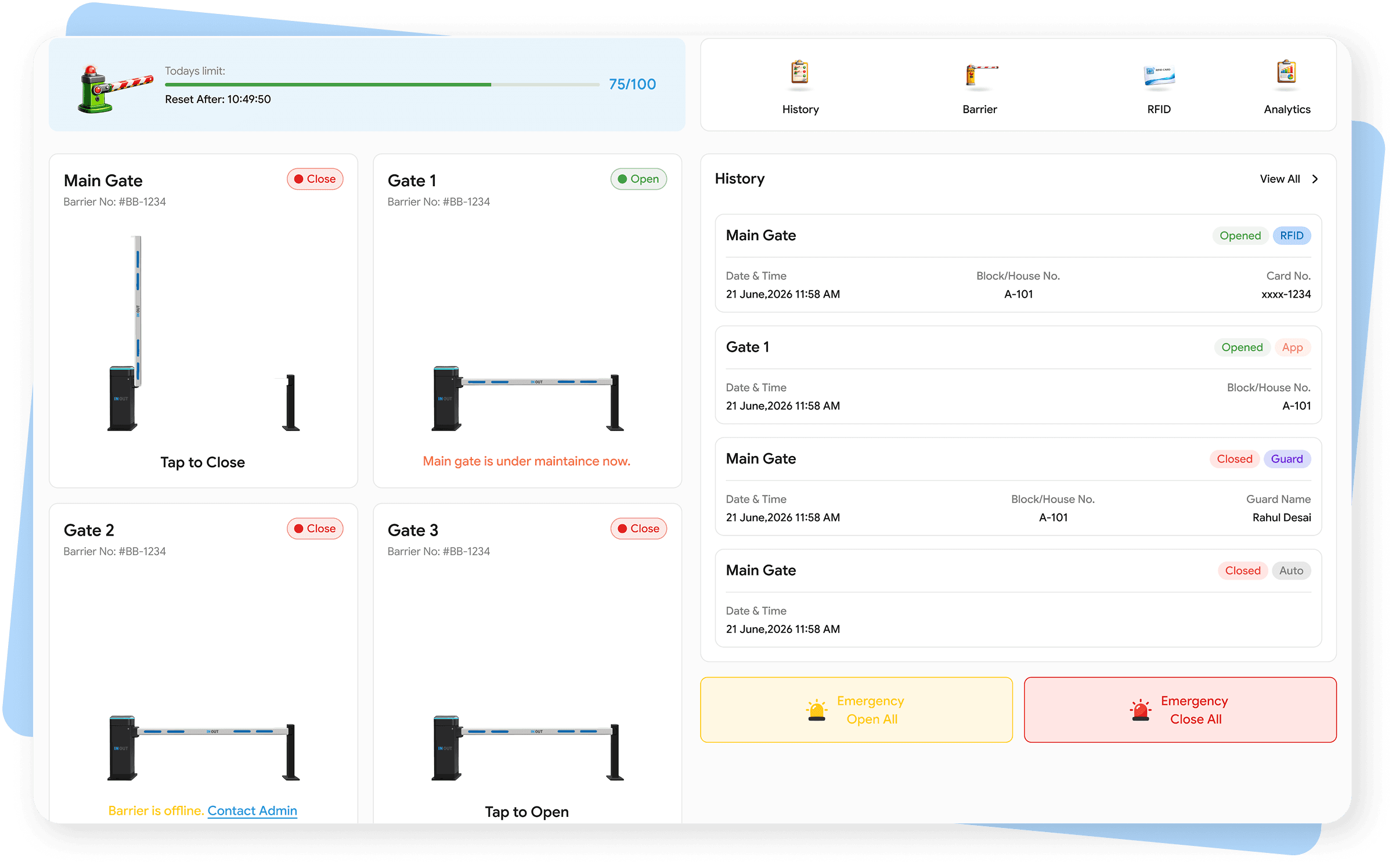
When a resident pre-approves a guest, delivery, or cab from the app, the security guard already knows who to expect and when. There's no need to call up to a flat to confirm a name that was scribbled illegibly in a register.
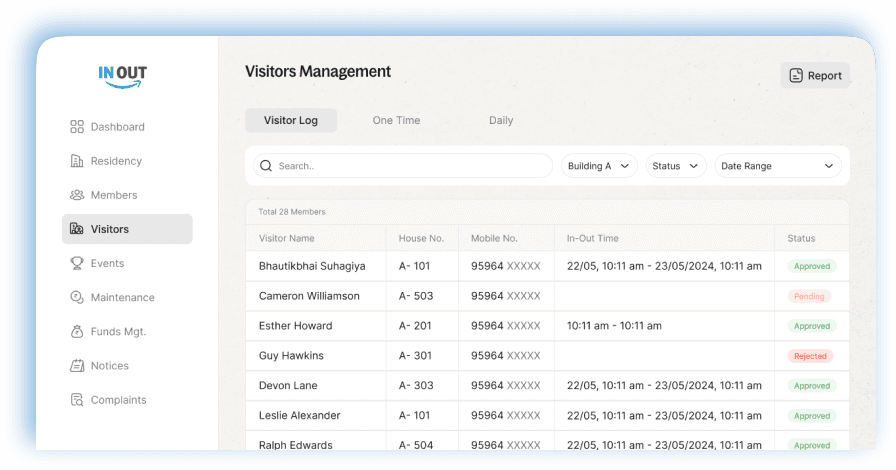
Instead of flipping through pages of a physical book, admins can search visitor history by name, flat number, date, or purpose of visit in seconds — essential when reconstructing a timeline after an incident.
Residents get a notification the moment a visitor checks in, and can approve or deny entry remotely. That single change removes most of the friction that used to make security feel like an inconvenience rather than a safeguard.
Domestic help, delivery partners, and maintenance vendors are frequent, recurring visitors. A digital system lets societies issue recurring passes with defined validity windows, so recurring access doesn't mean unrecorded access.
When RWAs or facility managers need to produce visitor records for compliance or an insurance claim, exportable digital reports save hours compared to manually transcribing register pages.
Security at the gate isn't just about keeping unwanted visitors out — it's about giving residents and staff a system they can rely on every single day. That's the shift digital visitor management brings to a residency.