Inout Loading
Explore Features
Stay Updated
Get the latest updates and insights into resident management solutions delivered straight to your inbox.
Download Our App
Get the latest updates and insights into resident management solutions delivered straight to your inbox.
Download Our App
Ask any society treasurer what eats up the most time in a month, and maintenance collection usually tops the list. Reminding residents, collecting cash or cheques, updating a spreadsheet, and reconciling the bank statement at month-end is a cycle that repeats endlessly — and it's prone to error every step of the way.
Manual tracking doesn't just cost time. It creates disputes over who paid what and when, delays visibility into a society's actual financial health, and makes audits far more painful than they need to be.
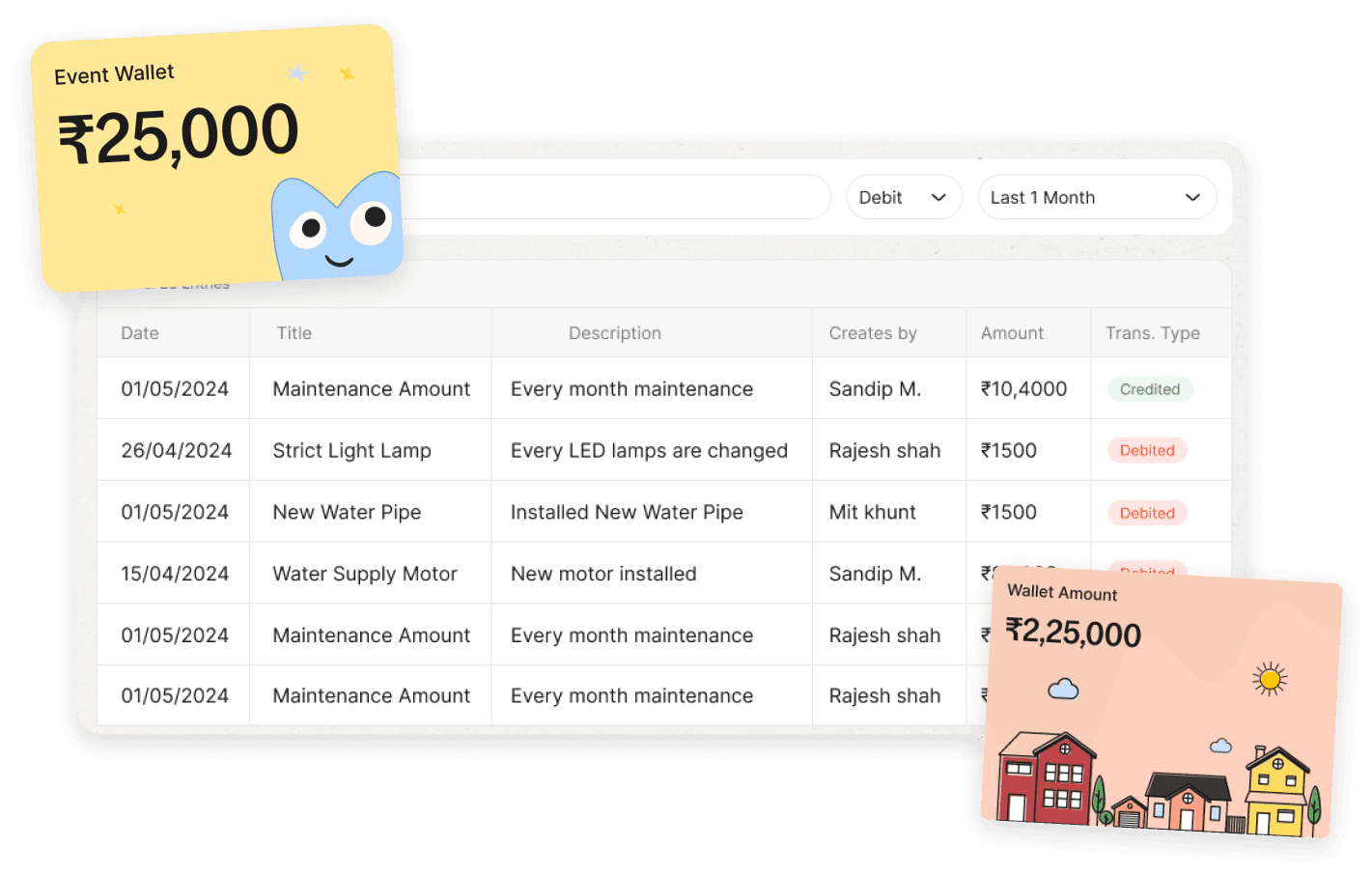
Beyond convenience, digital collection gives every resident visibility into where the money goes. When fund utilization and collection reports are available on demand rather than requested at an AGM, trust between residents and the managing committee improves naturally.
Picture a volunteer treasurer sitting down on the first of the month with a stack of cash receipts, a few cheques still to be deposited, and a spreadsheet that needs updating for eighty flats. Reconciling it against the bank statement takes an evening, and if two entries don't match, tracking down which resident's payment is unaccounted for can take another. Multiply that by twelve months, and it's easily thirty-plus hours of a volunteer's year spent on data entry rather than anything that actually improves the society. Online collection turns that evening of reconciliation into a five-minute glance at a dashboard that's already up to date.
Most societies that move to online collection don't force an all-or-nothing switch on day one. Residents who are less comfortable with UPI or cards can still hand over a cheque, which the admin logs manually into the same system — the record stays centralized either way, even if the payment method itself takes a little longer to fully migrate. What matters is that every payment, however it arrives, ends up in one place instead of a mix of a register and a spreadsheet.
There's a fair concern that automated reminders feel colder than a phone call from the treasurer. In practice, most committees keep both — the automated reminder catches the routine, on-time cases, while a personal follow-up is reserved for residents who are genuinely behind, which is a smaller, more manageable list once the routine reminders are handled automatically.
Switching a society's collection process online is rarely about technology for its own sake — it's about removing the friction that turns a routine monthly task into a recurring source of disputes.