Inout Loading
Explore Features
Stay Updated
Get the latest updates and insights into resident management solutions delivered straight to your inbox.
Download Our App
Get the latest updates and insights into resident management solutions delivered straight to your inbox.
Download Our App
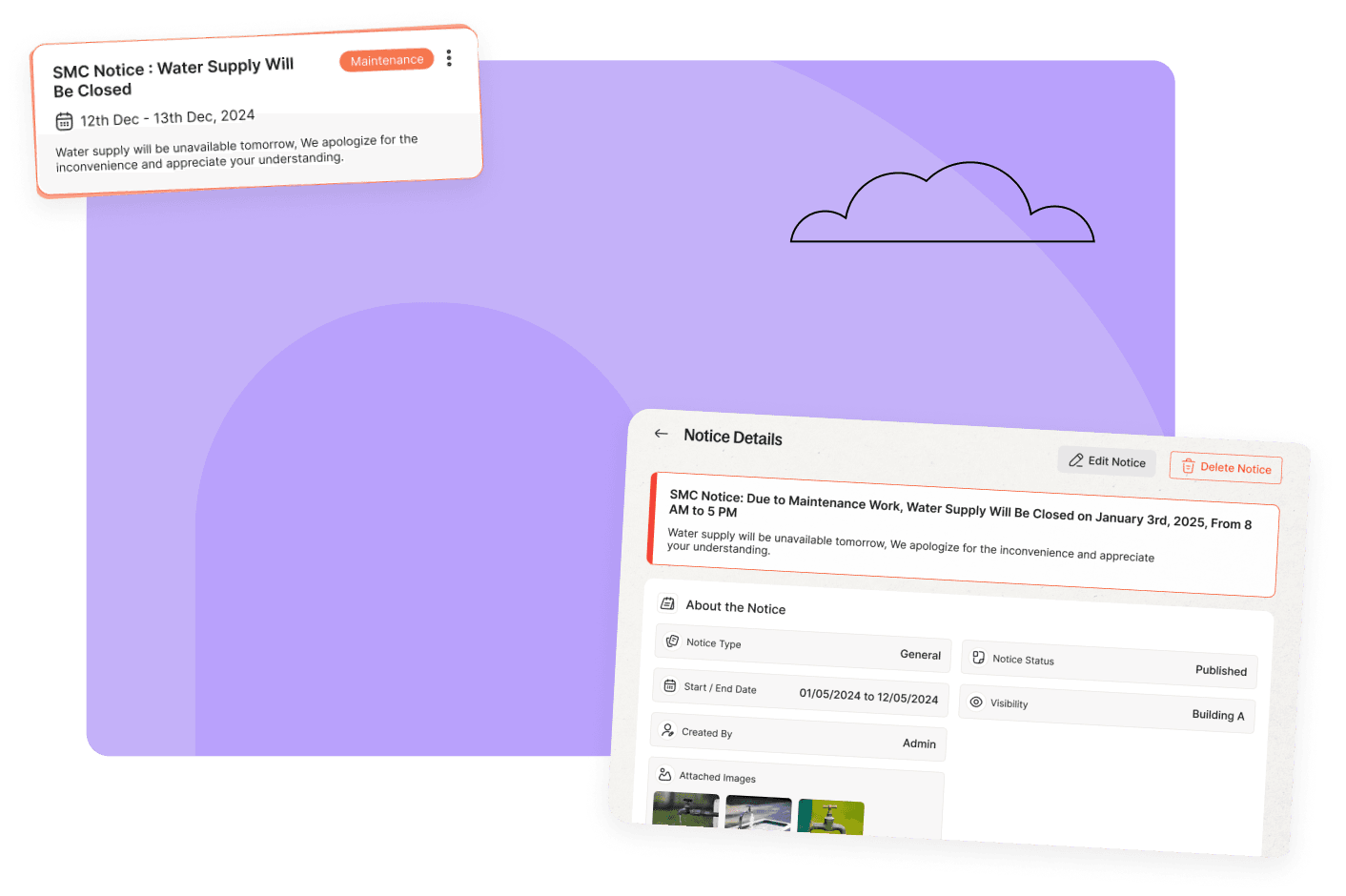
A printed notice taped to the lobby board assumes every resident walks past that spot regularly, reads carefully, and remembers what it said. In practice, most residents miss it entirely — especially in larger communities where notices compete for space and attention.
A digital notice board pushes the announcement directly to every resident's phone. Whether it's a water supply interruption, a society meeting, or a security advisory, the message reaches people instead of waiting for them to notice it.
When an admin can see exactly how many residents have opened and read a notice, follow-ups become targeted instead of society-wide re-announcements. That's a meaningful difference during time-sensitive updates like maintenance shutdowns or emergency alerts.
Take a real scenario: a society's main water tank needs cleaning, and supply will be cut from 10 PM to 6 AM on a Saturday. On a physical noticeboard, that notice reaches whoever happens to walk past the lift lobby before Saturday evening — which, realistically, is a fraction of residents. Anyone who works late, anyone who's traveling, anyone who simply doesn't pass that noticeboard that day finds out only when the tap runs dry. On a digital notice board, the same message goes out as a push notification the moment it's posted, and residents can plan around it — filling a bucket, adjusting a shower schedule — instead of discovering it the hard way at 11 PM.
Not necessarily, and it doesn't need to. Many societies keep a small physical board for walk-in visitors and for residents who prefer a quick glance in the lobby, while treating the digital version as the primary channel of record. What changes is which one admins rely on when it actually matters — for anything time-sensitive, the app-based notice is the one guaranteed to reach people directly, rather than hoping they walk past a specific spot.
This comes up in nearly every society with a mixed-age resident base. The practical answer most committees land on is to keep the same notice on the physical board as a backup during the transition period, and to lean on family members or the security desk to relay urgent notices to residents who aren't using the app yet. Over a few months, as residents get used to checking notifications for other things — visitor approvals, payment reminders — checking notices there stops feeling like an extra step.
Communication is one of the most underrated parts of running a residency well. Moving it online doesn't just modernize the process — it closes the gap between an announcement being made and it actually being seen.