Inout Loading
Explore Features
Stay Updated
Get the latest updates and insights into resident management solutions delivered straight to your inbox.
Download Our App
Get the latest updates and insights into resident management solutions delivered straight to your inbox.
Download Our App
Most societies handle complaints one at a time: a resident reports a problem, someone gets it fixed, and everyone moves on. What rarely happens is stepping back to ask whether this is the fifth time the same lift has broken down, or the third time water has pooled in the same corner of the basement.
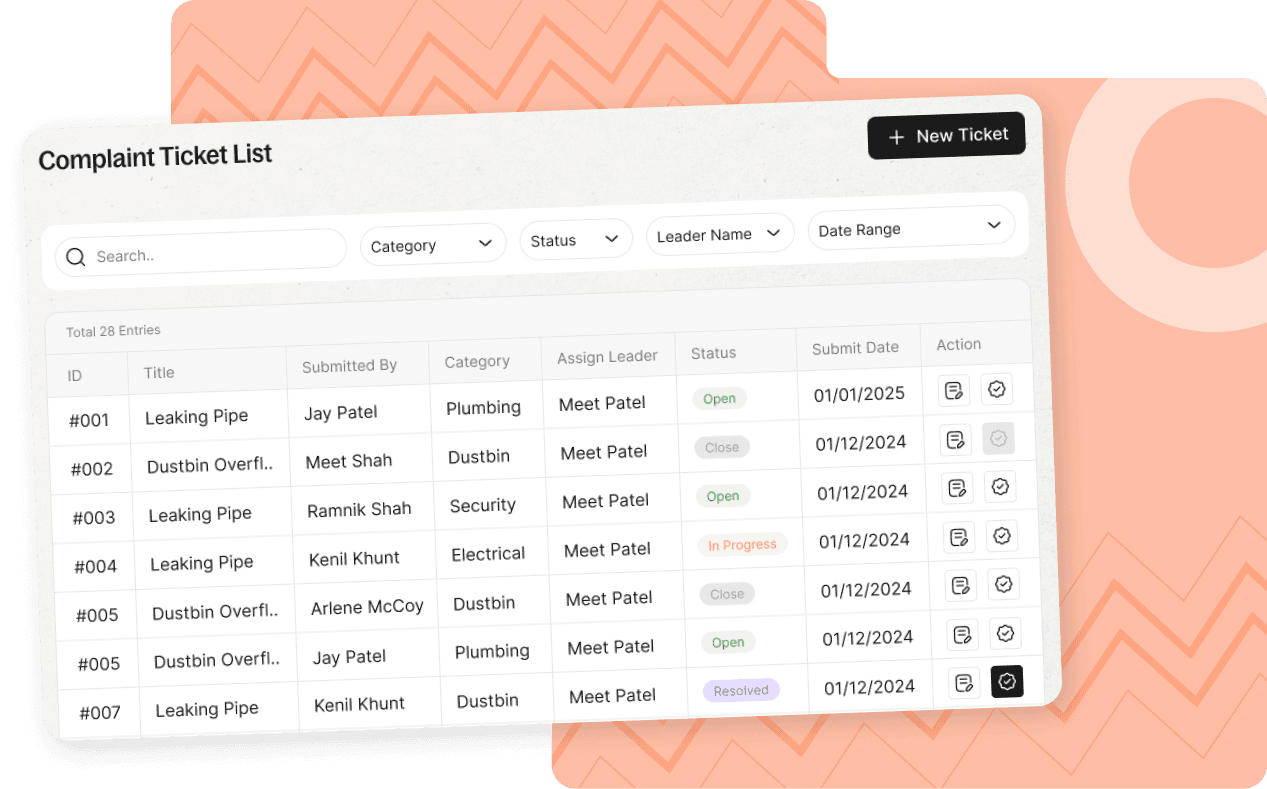
A digital complaint system doesn't just resolve individual issues faster — it builds a history. Once every complaint is tagged with a location, category, and date, recurring problems stop being anecdotal and start being visible in the data.
A leak patched for the third time is a different problem than a leak patched once — the first time calls for a plumber, the third time calls for a proper inspection of the pipeline. Without a record, that distinction is easy to miss, and the same repair budget gets spent on the same symptom every few months.
Tracking complaints was never just about response time. Done consistently, it turns into the closest thing a society has to a maintenance history — the kind of record that actually informs better decisions instead of just documenting the last fire that got put out.