Inout Loading
Explore Features
Stay Updated
Get the latest updates and insights into resident management solutions delivered straight to your inbox.
Download Our App
Get the latest updates and insights into resident management solutions delivered straight to your inbox.
Download Our App
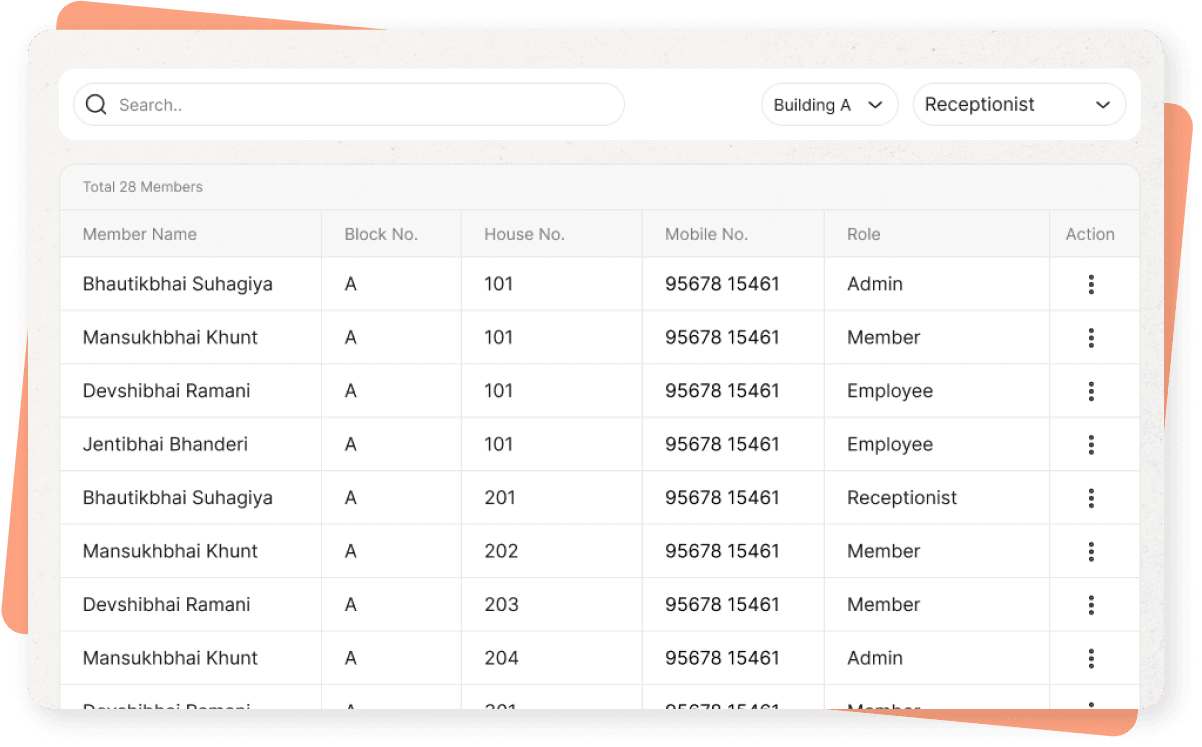
A residency with three towers and four hundred flats has an org chart, whether anyone has drawn it out or not. There are admins, committee members, individual residents, and staff — each needing a different level of access and a different set of responsibilities.
Managing that structure through a shared spreadsheet or a series of WhatsApp admin changes tends to fall apart exactly when it matters most — during a dispute, an audit, or a change in the managing committee.
Digital residency management lets admins add buildings, floors, and house numbers so the system reflects the real layout — not a flat list of names divorced from where anyone actually lives.
Knowing which units are currently occupied, rented out, or vacant affects everything from maintenance billing to security protocols for unfamiliar faces at the gate. Without a live record, this information tends to live only in the memory of whoever has been on the committee the longest — which is a fragile place to keep it.
Getting the structure right doesn't sound as exciting as a new gate sensor or a mobile app feature, but it's the foundation everything else — visitor approvals, billing, notices — is built on top of.